Your home’s plumbing system gives you warning signs before most problems turn into emergencies—but only if you know what to look for. The difference between a $150 repair and a $5,000 water damage restoration often comes down to catching a red flag early and acting on it before the situation escalates. Discolored water, unexplained bill spikes, gurgling sounds, slow drains, damp spots on walls—these aren’t minor annoyances. They’re your plumbing system telling you something is wrong.
The problem is that most Bucks County homeowners don’t recognize these signals until the damage is already done. A small ceiling stain gets ignored for weeks until the drywall collapses. A toilet that “runs a little” wastes 200 gallons a day for months. A faint sewer smell gets blamed on the dog instead of a failing wax ring.
This guide covers the eight most critical plumbing warning signs, explains what each one actually means, tells you how urgently you need to act, and shows you which ones you can address yourself versus which ones need a professional. In my 35+ years as a Master Plumber serving Feasterville, Southampton, Warminster, and all of Bucks County, I’ve seen every one of these red flags—and the homeowners who catch them early always come out ahead.
What You’ll Learn
- Why Plumbing Problems Get Worse When Ignored
- 8 Plumbing Red Flags and What They Mean
- How to Prioritize: Emergency vs. Soon vs. Monitor
- Why Bucks County Homeowners Choose Rick Lucas Plumbing
- Frequently Asked Questions
- Next Steps
Why Plumbing Problems Get Worse When Ignored
Plumbing issues don’t plateau—they escalate. A small leak doubles its damage output every few weeks as the moisture spreads into surrounding materials. Mold begins growing within 24–48 hours of sustained dampness. A partial clog in a drain line collects more debris with each use, eventually becoming a full blockage. A corroding pipe thins progressively until it fails under normal water pressure.
The reason most plumbing emergencies feel sudden is that the warning signs were present for weeks or months but went unrecognized. Every emergency call I’ve responded to in 35+ years of serving Bucks County started as a small problem that could have been caught earlier.
Here’s a cost comparison that illustrates why early action matters:
- Leaking toilet flapper caught early: $5–10 replacement part
- Same toilet ignored for 6 months: $300–$600 in wasted water plus potential subfloor damage
- Small pipe leak behind a wall caught in week one: $200–$400 repair
- Same leak ignored for 3 months: $3,000–$8,000+ in water damage restoration and mold remediation
The warning signs below are listed in order of urgency. Learn them, watch for them, and act when you see them.
8 Plumbing Red Flags and What They Mean
1. Water Stains on Walls, Ceilings, or Floors
What it looks like: Discolored patches (yellow, brown, or dark rings) on drywall or ceiling tiles. Bubbling, peeling, or warping paint. Soft or spongy spots in flooring. Baseboards that are warped or pulling away from the wall.
What it means: Water is actively leaking from a pipe, fixture, or drain line hidden inside the wall, ceiling, or floor cavity. By the time a stain is visible on the surface, the material behind it has been wet for days or weeks.
Why it’s urgent: Hidden moisture causes structural wood rot, drywall deterioration, and mold growth. Mold can begin colonizing within 24–48 hours of sustained dampness and creates health risks for your family. The longer the leak runs, the larger the remediation area becomes.
Urgency level: Act immediately. This is an active leak causing damage right now.
2. Unexplained Increase in Your Water Bill
What it looks like: Your water bill jumps significantly (20%+ increase) without a corresponding change in usage. Or it’s been creeping upward gradually over several months.
What it means: Water is leaving your plumbing system somewhere it shouldn’t be. The EPA estimates that the average household with fixable leaks wastes nearly 10,000 gallons per year. Common culprits include running toilets (up to 200 gallons per day), hidden pipe leaks, a leaking water heater, or an outdoor irrigation leak.
What to do: Perform a water meter test. Turn off all water inside and outside your home, note the meter reading, and check again after two hours. If the meter has moved, you have an active leak. Start checking toilets (food coloring test in the tank), visible pipes, the water heater base, and outdoor faucets.
Urgency level: Investigate this week. Every day you delay costs money and may be causing hidden damage.
3. Gurgling Sounds from Drains or Toilets
What it looks like: A bubbling or gurgling noise coming from a drain when water runs in a different fixture. For example, the toilet gurgles when you flush a nearby sink, or the tub drain gurgles when the washing machine empties.
What it means: Air is being displaced in your drain system because of a venting problem or a partial blockage in the main drain or sewer line. When water can’t flow freely, it creates pressure changes that force air through the nearest available water seal—producing the gurgling sound. This is often an early warning of a developing sewer line problem.
Why it matters: Gurgling that involves multiple fixtures usually indicates a main line issue. Left unaddressed, partial blockages become complete blockages, and the next step is sewage backing up into your lowest fixtures—typically a basement floor drain or ground-floor toilet.
Urgency level: Schedule service within a week. This rarely resolves itself and typically worsens.
4. Sewer or Rotten-Egg Smell Inside the Home
What it looks like: A persistent sewage odor or rotten-egg (hydrogen sulfide) smell in a bathroom, basement, laundry room, or near a floor drain. The smell may come and go or worsen at certain times of day.
What it means: Sewer gas is entering your living space. The most common causes are a dry P-trap in an unused drain, a failed wax ring under a toilet, a cracked or blocked vent pipe, or a damaged sewer line. Sewer gas contains hydrogen sulfide and methane—unpleasant at low concentrations and potentially dangerous at higher levels.
What to do first: Run water in every drain in the house (including rarely used ones) for 30–60 seconds to refill P-traps. If the smell persists after refilling all traps, the cause is deeper—a failed seal, vent issue, or sewer line problem that needs professional diagnosis.
Urgency level: Try the P-trap fix today. If it doesn’t resolve, call a plumber within a few days.
5. Discolored or Rusty Water
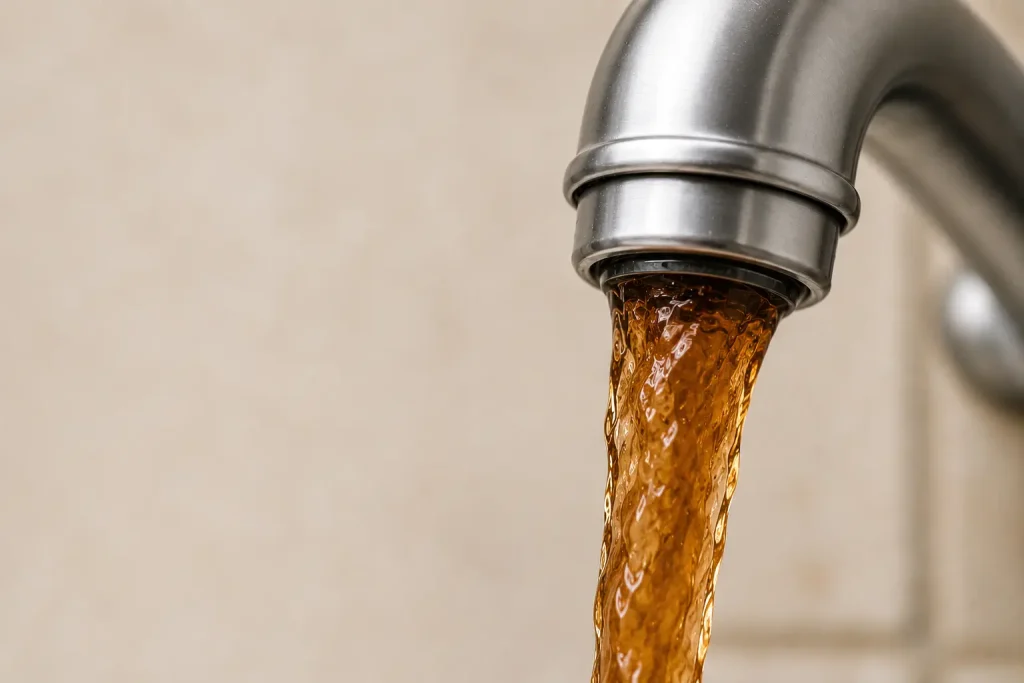
What it looks like: Brown, yellow, orange, or rust-colored water coming from your faucets. May appear only on the hot water side, only when you first turn on a faucet, or consistently throughout the day.
What it means: If it affects only hot water, the water heater’s anode rod is depleted and the tank is corroding internally. If it affects both hot and cold, your supply pipes are likely corroding—especially common in Bucks County homes with galvanized steel pipes installed before 1970. If the discoloration is temporary and affects the neighborhood, your municipal water provider may be performing hydrant flushing or main repairs.
Why it matters: A corroding water heater is approaching failure and potential flooding. Corroding supply pipes will continue to narrow, reducing pressure and eventually developing pinhole leaks. In either case, the discoloration signals active deterioration that’s progressing.
Urgency level: Check with neighbors and your water provider first. If it’s isolated to your home, schedule a plumbing assessment within two weeks.
6. Slow Drains in Multiple Fixtures
What it looks like: Two or more drains in different areas of the house are draining slowly. The bathtub, kitchen sink, and basement floor drain are all sluggish. Water backs up in one fixture when another is used.
What it means: A single slow drain is usually a local clog. Multiple slow drains simultaneously point to a blockage in the main drain or sewer line—the shared pipe that carries all wastewater out of your home. Common causes include tree root intrusion, a collapsed or bellied pipe section, or heavy grease and sediment buildup in the main line. Many older homes across Feasterville, Southampton, Levittown, and Bensalem have clay or cast iron sewer lines that are especially susceptible.
Urgency level: Call a plumber this week. Multiple slow drains are a precursor to a complete sewer backup—one of the most damaging and unsanitary plumbing emergencies a homeowner can face.
7. Banging, Rattling, or Hammering Pipes (Water Hammer)
What it looks like: A loud banging or hammering noise when you turn off a faucet, when the washing machine valve closes, or when the dishwasher cycles. Pipes may also rattle or vibrate audibly inside walls.
What it means: Water hammer occurs when fast-moving water is suddenly stopped by a closing valve, creating a pressure shockwave that slams through the pipes. It’s caused by failed or missing water hammer arrestors, high water pressure (above 80 PSI), loose pipe mounting straps, or air chambers that have become waterlogged.
Why it matters: The repeated pressure shocks stress pipe joints, fittings, and connections. Over time, water hammer can loosen solder joints, crack fittings, damage appliance valves, and cause leaks—especially in older homes where pipe connections have already weakened with age. Homes in Richboro, Newtown, Warrington, and Holland with copper plumbing are particularly susceptible.
Urgency level: Address within a month. Not an emergency, but the cumulative stress causes increasing damage over time.
8. Lush Green Patches or Soggy Spots in Your Yard
What it looks like: An area of your lawn that’s noticeably greener, grows faster, or stays wet when the rest of the yard is dry. You may also notice sunken or soft spots in the ground, or a foul odor near the surface.
What it means: Water or sewage is leaking from an underground pipe—either your main water supply line or your sewer line. A water line leak pushes extra moisture into the surrounding soil, creating an artificially green patch. A sewer line leak does the same while also fertilizing the grass with organic material and producing an odor.
Why it matters: Underground leaks waste enormous amounts of water (driving up bills), can undermine your home’s foundation soil, and—in the case of sewer leaks—create health and environmental hazards. Saturated soil near your foundation increases the risk of basement water intrusion and structural settling.
Urgency level: Call a plumber within a week. Underground leaks don’t stop on their own and the damage compounds daily.
How to Prioritize: Emergency vs. Soon vs. Monitor
Not every red flag requires an emergency call. Here’s a framework for prioritizing:
Act immediately (call today): Water stains spreading on walls or ceilings, sewage backing up into fixtures, water actively spraying or flooding, no water to the entire house, gas smell near water heater or gas lines
Schedule this week: Unexplained water bill increases, multiple slow drains, gurgling from drains or toilets, persistent sewer smell after P-trap refill, soggy spots or green patches in yard
Address within a month: Discolored water isolated to your home, water hammer noises, a single slow drain that doesn’t respond to cleaning, minor dripping from a fixture
Monitor and maintain: Occasional faint odor from a rarely used drain (refill the P-trap monthly), minor water pressure fluctuation during peak hours, a faucet that drips once every few minutes (replace the washer at your convenience)
When in doubt, call. A quick phone consultation can help you determine whether something needs immediate attention or can wait. At Rick Lucas Plumbing, a five-minute phone call with Rick can save you hours of worry and help you make the right decision.
Why Bucks County Homeowners Choose Rick Lucas Plumbing
When a plumbing red flag appears, you need a plumber who can diagnose the real cause quickly and give you a straight answer about what needs to happen—not someone who turns every service call into a sales pitch for work you don’t need.
Rick Lucas Plumbing & Remodeling brings 35+ years of Master Plumber expertise to every diagnostic call across Bucks County. Rick is your direct point of contact—no dispatchers, no call centers. When you call (215) 396-0736, you’re reaching the Master Plumber who will listen to your symptoms, assess the situation, and tell you honestly whether it’s something you can handle yourself or something that needs professional repair.
Our customers trust that honesty. One homeowner shared: “Rick returned my call in less than an hour.” Another noted: “The inspector said it’s nice to deal with professionals.” When your plumbing is sending warning signs, responsiveness and expertise make all the difference.
We serve Feasterville, Southampton, Richboro, Holland, Newtown, Warrington, Langhorne, Levittown, Yardley, Bensalem, Warminster, Ivyland, and all of Bucks County. Free consultations, transparent pricing, and 24/7 emergency availability. PA Master Plumbing License PA144291, BuildZoom Score 91/100.
Frequently Asked Questions
Q: What are the most common signs of a hidden plumbing problem?
The most reliable indicators are unexplained water bill increases, water stains on walls or ceilings, musty or sewer-like odors, gurgling sounds from drains, discolored water, multiple slow drains, and wet spots in your yard. Any of these signals that something is wrong inside your plumbing system that you can’t see directly.
Q: How do I know if I have a water leak I can’t see?
Perform a water meter test. Turn off all water inside and outside your home, record the meter reading, and check again after two hours without using any water. If the meter has moved, you have an active leak. Also watch for rising water bills, damp spots on walls or floors, musty odors, and mold growth in areas that shouldn’t be wet.
Q: Why do my drains gurgle when I flush the toilet?
Gurgling indicates air displacement in the drain system, usually caused by a partial blockage in the main drain line or a venting problem. When water can’t flow freely through the system, it creates pressure changes that push air through the nearest water seal. This is often an early warning sign of a developing sewer line issue that should be inspected promptly.
Q: Is discolored water dangerous?
Brown or rusty water from corroding pipes is generally not a health hazard, but it indicates active pipe deterioration that will worsen over time. If discoloration is accompanied by an unusual taste or odor, or if you have concerns about lead (possible in pre-1986 homes), have your water tested. Persistent discoloration from your home’s plumbing should be assessed by a licensed plumber.
Q: What should I do if I smell sewer gas in my house?
First, run water in every drain for 30–60 seconds to refill dry P-traps—this is the most common cause. If the smell persists, the source may be a failed wax ring under a toilet, a cracked vent pipe, or a damaged sewer line. Persistent sewer gas contains hydrogen sulfide and methane, which can be harmful at high concentrations. Call a plumber if refilling P-traps doesn’t eliminate the odor.
Q: How much does it cost to diagnose a plumbing problem in Bucks County?
Rick Lucas Plumbing offers free consultations and transparent estimates. The cost of diagnostic work depends on the complexity—a visual inspection and pressure test may be all that’s needed, while camera inspection of sewer lines or thermal imaging for hidden leaks involves specialized equipment. In every case, the diagnostic cost is a fraction of what you’ll spend if a warning sign is ignored and becomes an emergency.
Q: Can I ignore a slowly dripping faucet?
It’s not an emergency, but don’t ignore it indefinitely. A faucet dripping once per second wastes over 3,000 gallons per year according to the EPA. More importantly, the drip often worsens as the internal washer or valve seat continues to deteriorate. Replacing a washer is a quick, inexpensive fix. Waiting until the drip becomes a steady stream means a more expensive repair.
Q: When should I call a plumber instead of trying to fix it myself?
Call a plumber for anything involving the main water or sewer line, gas lines, work behind walls or under slabs, multiple fixtures affected simultaneously, sewage backups, or problems you’ve tried to fix that keep returning. Also call when you’re unsure—a five-minute phone consultation can help you determine whether the issue is a simple DIY fix or something that needs professional attention.
Next Steps
Your plumbing system is always communicating. The question is whether you’re listening. Here’s your action plan:
- Walk through your home and check for the eight warning signs described in this guide
- Pay attention to your water bill—a sudden or gradual increase is one of the earliest and most reliable indicators of a hidden problem
- Run water in rarely used drains monthly to keep P-traps filled and prevent sewer gas entry
- If you spot any red flag, use the priority framework above to determine how urgently to act
- For any warning sign that’s beyond a simple DIY fix, call Rick Lucas Plumbing at (215) 396-0736 for a free consultation
Don’t wait for a warning sign to become an emergency. Contact Rick Lucas Plumbing & Remodeling today at (215) 396-0736 or visit ricklucasplumbing.com. We serve Feasterville, Southampton, Warminster, Langhorne, and all of Bucks County with free consultations, transparent pricing, and 24/7 emergency availability. “The Best Plumber in Bucks County!”