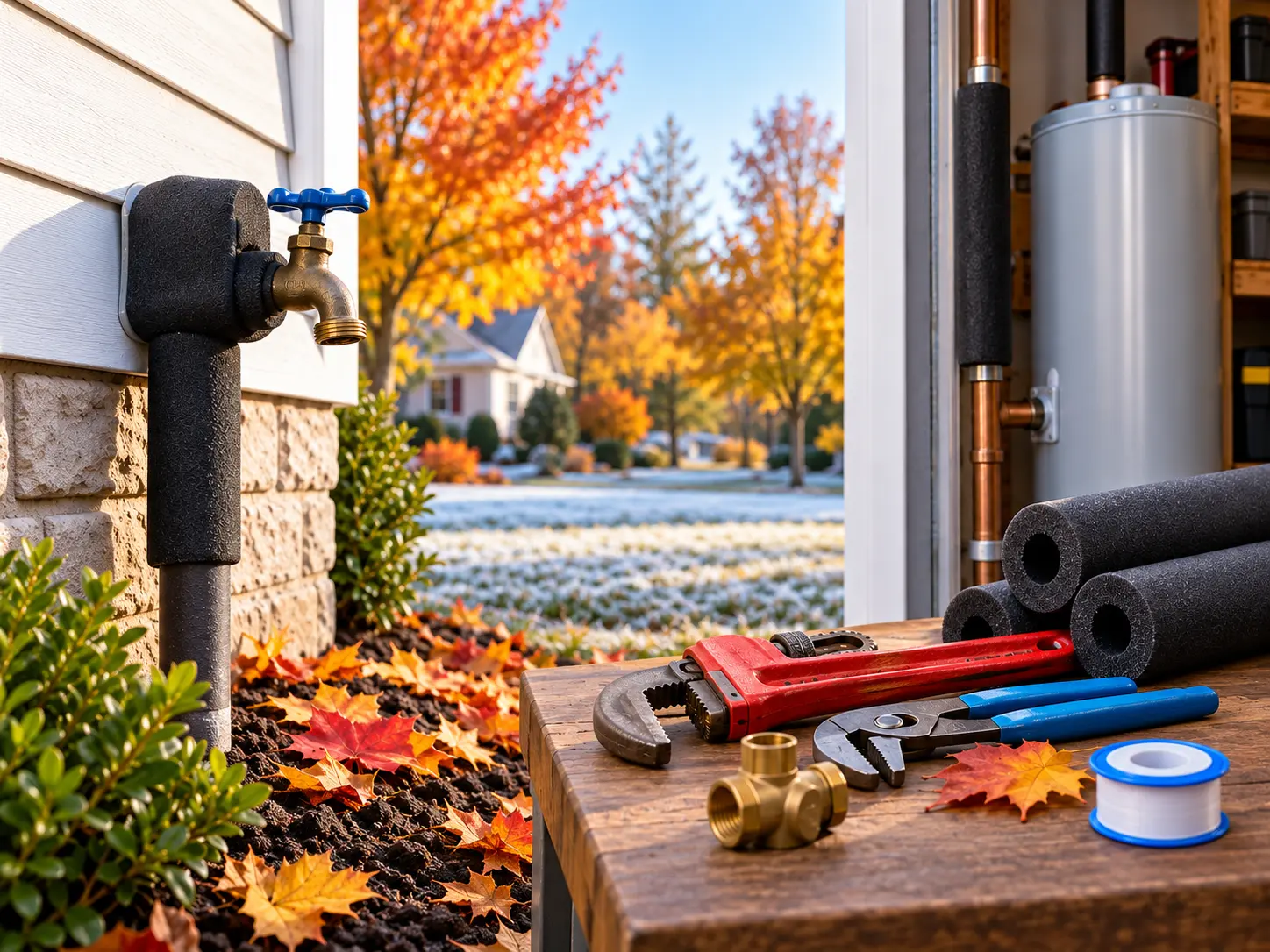
Getting your outdoor faucets ready for summer takes about 15 minutes and can prevent the kind of hidden water damage that costs Bucks County homeowners thousands of dollars every spring. Your outdoor hose bibs—the spigots mounted on the exterior of your house—endure more abuse from Pennsylvania winters than almost any other plumbing fixture. Freezing temperatures can crack the pipe behind the wall, damage internal valve components, and compromise seals without leaving any visible sign on the outside.
The damage only reveals itself when you turn the faucet on for the first time in spring or summer. Water sprays from the wall connection, pools inside the basement, or seeps into the framing where you can’t see it. According to the EPA, even a single faucet dripping once per second wastes more than 3,000 gallons of water per year—and an undetected outdoor leak can saturate your foundation soil, raise your water bill, and create the conditions for mold growth behind your siding.
This step-by-step guide shows you exactly how to inspect, test, and prepare your outdoor faucets for safe summer use. In my 35+ years as a Master Plumber serving Feasterville, Southampton, Warminster, and communities throughout Bucks County, I’ve seen more preventable water damage from outdoor faucets than almost any other fixture. A quick springtime inspection is the easiest way to avoid it.
What You’ll Learn
- Why Outdoor Faucets Are Vulnerable After Winter
- What Causes Outdoor Faucet Failures
- Step-by-Step: Getting Your Outdoor Faucets Summer-Ready
- When to Repair vs. Replace Your Hose Bib
- Why Bucks County Homeowners Choose Rick Lucas Plumbing
- Frequently Asked Questions
- Next Steps
Why Outdoor Faucets Are Vulnerable After Winter
Outdoor hose bibs are the most freeze-exposed fixtures on your home. They penetrate directly through the exterior wall, connecting indoor plumbing to the outside. Unlike indoor pipes that stay in heated spaces, the pipe behind your hose bib runs through uninsulated wall cavities and is exposed to the full force of Bucks County winters.
Here’s why even mild winters can cause damage:
- Water trapped in the pipe between the outdoor spigot and the indoor shut-off valve freezes and expands by approximately 9%, generating enough pressure to crack copper, brass, and even galvanized steel fittings
- Frost-free hose bibs—designed to prevent freezing—fail when a garden hose is left connected over winter, trapping water inside the long stem and defeating the drain-back design
- Repeated freeze-thaw cycles weaken valve seats, rubber washers, and packing nuts, creating drips and leaks that worsen over summer
- Cracks in the pipe often form behind the wall where they’re invisible, only leaking when water pressure returns in spring
Many Bucks County homeowners assume that if their outdoor faucet looks fine from the outside, everything is okay. The problem is that the most serious damage—a cracked pipe inside the wall—is invisible until water is running through the system. That’s why a proper test matters more than a visual inspection.
What Causes Outdoor Faucet Failures
In our 35+ years of hose bib repairs across Feasterville, Langhorne, Holland, and Levittown, these are the root causes we see most often:
Garden Hose Left Connected Over Winter
This is the number-one cause of outdoor faucet damage—and it’s entirely preventable. When a hose stays connected to the spigot, it traps water in the pipe between the faucet and the interior shut-off point. Even frost-free hose bibs rely on the ability to drain water back toward the heated interior when the faucet is closed. A connected hose blocks that drainage, trapping water exactly where it’s most vulnerable to freezing. The result is a cracked pipe or split fitting behind the wall that doesn’t reveal itself until you turn the water back on months later.
Failed Interior Shut-Off Valve or Bleeder Cap
Most homes have a dedicated shut-off valve inside the house (typically in the basement) that controls water flow to each outdoor spigot. Many also have a bleeder cap—a small knob on the pipe near the shut-off valve that allows residual water to drain out during winterization. If the shut-off valve doesn’t fully close, or if the bleeder cap was left open or wasn’t used during winterization, water remains in the exterior pipe all winter. When temperatures drop, that water freezes and damages the line.
Worn Washers, Packing Nuts, and Valve Seats
Even without a freeze event, outdoor faucets degrade over time. The rubber washer at the end of the valve stem compresses with every use and eventually fails to create a watertight seal. The packing nut—which seals around the valve stem where it passes through the faucet body—loosens from thermal cycling and normal use. Mineral deposits from Bucks County’s hard water accelerate corrosion on metal components. These wear items usually produce drips at the spigot head or leaks around the handle.
Missing or Damaged Vacuum Breaker
Plumbing code has required hose bib vacuum breakers since 1963. This small device screws onto the spigot where you connect the hose and prevents contaminated water—from garden hoses, fertilizer sprayers, or chemical applicators—from being siphoned back into your household drinking water during a pressure drop. Many outdoor faucets in older Bucks County homes have missing, cracked, or non-functional vacuum breakers. It’s a quick and inexpensive fix, but one that protects your family’s health.
Step-by-Step: Getting Your Outdoor Faucets Summer-Ready
This process takes about 15 minutes and works best with two people—one outside at the faucet and one inside at the shut-off valve. If you’re working alone, you’ll need to move between locations during the test.
Step 1: Remove Winter Covers and Inspect Visually
Remove any insulated faucet covers you installed for winter. Then inspect the exterior of each hose bib:
- Look for visible cracks, corrosion, or rust on the spigot body and where it enters the wall
- Check that the handle turns smoothly—a stiff or stuck handle may indicate internal mineral buildup or a seized valve stem
- Examine the wall surface around the spigot for water stains, discoloration, or soft spots in the siding
- Confirm that no garden hose is still attached from last season
Step 2: Close the Outdoor Faucet and Open the Interior Shut-Off
Before letting water flow, make sure the outdoor faucet handle is fully closed (turned clockwise until it stops). Then go inside to the basement or utility area and locate the interior shut-off valve for the outdoor line. Close the bleeder cap if it’s open (turn the small knob clockwise with pliers). Then slowly open the shut-off valve to allow water to pressurize the line between the interior valve and the outdoor faucet.
While the line is pressurizing, have someone inside watch the pipe, valve, and wall area around the shut-off for any dripping, seeping, or spraying. Dampness on the pipe, wet spots on the wall, or water on the floor joists near the exterior wall are signs of a crack or failed fitting behind the wall.
Step 3: Slowly Open the Outdoor Faucet and Test
With someone still watching inside, slowly turn the outdoor faucet handle counterclockwise to open it. Watch for:
- Water flowing steadily from the spigot—good pressure indicates no blockage or major leak upstream
- Dripping from around the handle or packing nut—this indicates a worn packing seal that needs tightening or replacement
- Water spraying, dripping, or seeping from where the spigot meets the wall—this is a red flag for a cracked pipe behind the wall. Shut the water off immediately and call a plumber
- Inside the house, any new dampness or dripping near the pipe run—hidden leaks often show up at the interior shut-off, along floor joists, or on the drywall near the faucet location
Step 4: Attach and Pressure-Test with a Garden Hose
If the faucet passes the open-flow test, attach a garden hose and turn the water on. This adds back-pressure to the system that simulates normal summer use. Then attach a spray nozzle to the hose end and cycle it on and off several times with brief pauses between each cycle. This tests the upper limit of pressure your hose bib will face during regular use.
Have someone inside watch the pipe and wall area during this pressure test. Some cracks only leak under the higher pressure created when a nozzle blocks the hose end and forces water to push against the pipe walls. If everything stays dry inside and out, your faucet is summer-ready.
Step 5: Check the Vacuum Breaker
Look at the threaded connection point on your hose bib where you attach the garden hose. There should be a small device—the vacuum breaker—between the spigot threads and the hose connection. It looks like a small barrel or cap with slots or vents.
- If it’s present, check that it’s not cracked, corroded, or stuck. Water should not leak from the vacuum breaker when the hose is running.
- If it’s missing, install one. They cost $3–8 at any hardware store and screw on by hand. This protects your drinking water from backflow contamination—it’s required by plumbing code and is one of the cheapest safety measures you can take.
Step 6: Inspect and Maintain
Complete your summer preparation with these maintenance steps:
- If the handle is stiff, apply plumber’s grease to the valve stem to reduce friction and extend the life of the packing
- If you see white mineral deposits on the spigot threads, clean them with white vinegar and a brush to keep hose connections tight
- If the faucet drips slightly from the spout when closed, the internal rubber washer likely needs replacement—a $5 part and a 15-minute repair for most homeowners
- Repeat this entire process for every outdoor faucet on your home—most Bucks County homes have one or two, but larger properties may have more
When to Repair vs. Replace Your Hose Bib
Not every issue requires a full replacement. Here’s how to decide:
Repair Makes Sense When:
- The faucet drips from the spout—usually a worn washer (under $10 in parts)
- Water leaks from around the handle—usually a loose or worn packing nut (tighten or replace the packing)
- The handle is stiff but not seized—lubrication and mineral cleaning can restore function
- The vacuum breaker is damaged or missing—replace it for $3–8
Replace Is the Better Choice When:
- Water leaks from the wall connection or from behind the wall—this indicates a cracked pipe or fitting that can’t be patched reliably
- The spigot body shows visible cracks, pitting, or severe corrosion
- The faucet is not frost-free and you live in a freeze-prone area (all of Bucks County qualifies)
- The same faucet has needed repair multiple seasons in a row
- The internal stem is compromised from a freeze event—patching a cracked frost-free bib is not recommended because the internal stem is permanently weakened
Replacing a hose bib is a job for a licensed plumber in most cases, especially if the pipe behind the wall needs repair or if the replacement requires soldering copper connections. A frost-free hose bib upgrade is one of the most cost-effective investments Bucks County homeowners can make to prevent future winter damage.
Why Bucks County Homeowners Choose Rick Lucas Plumbing
When an outdoor faucet test reveals a crack behind the wall or a pipe that needs replacement, you need a plumber who can access the damage quickly, repair it properly, and ensure the new installation is protected against next winter.
Rick Lucas Plumbing & Remodeling has been repairing and replacing outdoor faucets across Bucks County for over 35 years. Rick is a Master Plumber and your direct point of contact—from the initial assessment through job completion. No dispatchers, no call centers—just a licensed professional who knows Bucks County homes, wall construction, and pipe materials inside and out.
Our customers trust that expertise. One Bucks County homeowner shared: “Rick returned my call in less than an hour.” Another emphasized: “Showed up early and not a penny over estimate.” When a hidden pipe crack is spraying water inside your wall, that kind of responsiveness matters.
We serve Feasterville, Southampton, Richboro, Holland, Newtown, Warrington, Langhorne, Levittown, Yardley, Bensalem, Warminster, Ivyland, and all of Bucks County. Free consultations, transparent pricing, and 24/7 emergency availability. PA Master Plumbing License PA144291, BuildZoom Score 91/100.
Frequently Asked Questions
Q: When should I turn on my outdoor faucets for summer in Bucks County?
Wait until the threat of overnight freezing has consistently passed—typically mid-April to early May in Bucks County. Turning on outdoor faucets while nighttime temperatures still drop below freezing risks additional freeze damage to pipes that may already be weakened from winter.
Q: How do I know if my outdoor faucet was damaged over winter?
The only reliable way to check is to pressurize the line and test for leaks with two people—one outside at the faucet and one inside watching the pipe and wall. A faucet can look perfectly normal on the outside while the pipe behind the wall has a crack that only leaks under pressure. Dampness on the interior wall, dripping at the shut-off valve, or water on the floor joists are red flags.
Q: What is a frost-free hose bib and do I need one?
A frost-free hose bib has a long stem that positions the actual shut-off valve deep inside the heated wall, keeping water away from the freezing exterior. When you close the faucet, water drains back toward the interior, preventing ice formation. Every home in Bucks County benefits from frost-free hose bibs. If your current spigots are standard, upgrading is one of the most effective ways to prevent winter pipe damage.
Q: My outdoor faucet drips when it’s turned off. Is that a big deal?
Yes. Even a slow drip wastes over 3,000 gallons per year according to the EPA and indicates a worn internal washer or valve seat. The drip will worsen over time and can saturate soil near your foundation, contributing to basement moisture problems. Replacing the washer is typically a quick, inexpensive repair.
Q: Can I replace an outdoor faucet myself?
Simple repairs like replacing a washer or installing a vacuum breaker are manageable DIY tasks. However, replacing the entire hose bib typically requires soldering copper pipe or working inside the wall cavity, and is best handled by a licensed plumber. Improper installation can cause hidden leaks behind the wall that lead to significant water damage.
Q: What is a vacuum breaker and why does my hose bib need one?
A vacuum breaker is a small device that screws onto your hose bib and prevents contaminated water—from garden hoses, fertilizer sprayers, or pet wash stations—from being siphoned back into your home’s drinking water supply during a pressure drop. They’ve been required by plumbing code since 1963 and cost $3–8 at any hardware store.
Q: How much does it cost to replace a hose bib in Bucks County?
A standard hose bib replacement in Bucks County typically costs between $150 and $350, depending on accessibility and pipe material. Upgrading to a frost-free model may run $200–500 including installation. If the pipe behind the wall is also damaged, repair costs increase based on the extent of the damage. Rick Lucas Plumbing provides free estimates before any work begins.
Q: Should I leave my garden hose connected to the outdoor faucet?
Never leave a garden hose connected when you’re not actively using it—especially overnight or over winter. A connected hose traps water in the pipe and defeats the drain-back design of frost-free hose bibs. This is the single most common cause of outdoor faucet failure we see across Bucks County. Always disconnect the hose after each use.
Next Steps
Getting your outdoor faucets summer-ready is a 15-minute task that prevents some of the most expensive water damage homeowners face. Here’s your action plan:
- Walk the exterior of your home and identify every outdoor faucet
- Remove winter covers and conduct the visual inspection described in Step 1
- Recruit a helper and run the full two-person pressure test (Steps 2–4)
- Check and replace vacuum breakers as needed (Step 5)
- If you find any leaks at the wall, dampness inside, or a cracked spigot, call Rick Lucas Plumbing at (215) 396-0736 immediately—don’t use the faucet until it’s been inspected
Don’t let hidden winter damage ruin your summer. Contact Rick Lucas Plumbing & Remodeling today at (215) 396-0736 or visit ricklucasplumbing.com for a free, no-obligation estimate. We serve Feasterville, Southampton, Warminster, Langhorne, and all of Bucks County with 24/7 emergency availability and transparent pricing. “The Best Plumber in Bucks County!”
About the Author
Rick Lucas is the owner and Master Plumber at Rick Lucas Plumbing & Remodeling, a family-owned plumbing company serving Feasterville and all of Bucks County, PA. With over 35 years of hands-on plumbing experience and a Pennsylvania Master Plumbing License (PA144291), Rick specializes in residential plumbing, commercial plumbing, outdoor faucet repair, water heater services, bathroom remodeling, and emergency repairs. Rick is the main point of contact for every customer, ensuring expert service from diagnosis to completion.