Winterizing your pipes comes down to one goal: keep the water inside them from freezing, because when water freezes it expands by about 9%, and no pipe can hold that much pressure without cracking. The pipes most at risk in a Bucks County home are the ones in unheated or poorly heated spaces—garages, crawl spaces, unfinished basements, attics, and runs along exterior walls. Protecting those specific pipes with the right insulation, a little heat, and a few cold-snap habits is what prevents the burst pipe that floods a home every winter.
A single burst pipe can release hundreds of gallons of water into your home and cause thousands of dollars in damage. The frustrating part is how preventable it is. Most frozen-pipe disasters trace back to one unprotected pipe in a cold corner that nobody thought about until it failed. This guide shows you exactly which pipes to protect, how to insulate them correctly, what to do during an extreme cold snap, how to protect your home when you travel, and the right steps to take if a pipe does freeze.
In our 35+ years protecting Bucks County homes through Pennsylvania winters, we’ve seen the difference preparation makes. The homeowners who winterize the vulnerable pipes in their home rarely deal with a frozen-pipe emergency. The ones who skip it are the calls we get at 2 a.m. in January. This guide helps you be the first kind.
What You’ll Learn
- Why Pipes Freeze and Burst
- Which Pipes in Your Home Are Most at Risk
- How to Insulate Pipes the Right Way
- Cold Snap Tactics: Extra Protection When It’s Dangerously Cold
- Protecting Pipes When You’re Away
- What to Do If a Pipe Freezes
- Why Bucks County Homeowners Choose Rick Lucas Plumbing
- Frequently Asked Questions
- Next Steps
Why Pipes Freeze and Burst
Water has an unusual property: unlike almost every other liquid, it expands as it freezes. When the water inside a pipe turns to ice, it swells by roughly 9% and generates enormous outward pressure against the pipe walls. No residential pipe—copper, PEX, or galvanized steel—is built to withstand that force, so the pipe cracks or splits.
Here’s the part that surprises most homeowners: the pipe doesn’t usually burst at the frozen spot itself. As ice forms and expands, it pushes water ahead of it, and pressure builds up in the section of pipe between the ice blockage and a closed faucet. The pipe often fails at that pressurized point, which can be some distance from the actual ice. That’s why relieving pressure matters as much as preventing the freeze.
Water generally starts to freeze in exposed pipes once sustained temperatures drop into the low 20s Fahrenheit, though wind chill, poor insulation, and drafts can cause freezing sooner. In Bucks County, where overnight lows regularly fall into that range from December through February, any unprotected pipe in a cold space is a genuine risk every winter.
Which Pipes in Your Home Are Most at Risk
You don’t need to insulate every pipe in your home. You need to find and protect the vulnerable ones. Walk through your home and identify pipes in these high-risk locations:
- especially supply lines running along exterior foundation wallsUnheated basements and crawl spaces,
- where water lines to a utility sink, water heater, or outdoor spigot often run through an unheated spaceAttached garages,
- where pipes serving upstairs bathrooms may run through uninsulated spaceAttics,
- where pipes sit in wall cavities with little insulation between them and the cold outsideExterior wall runs,
- particularly kitchen and bathroom sinks mounted against an outside wallUnder sinks on exterior walls,
- which penetrate directly through the exterior wall and are the most freeze-exposed fixtures on the houseOutdoor spigots and hose bibs,
Older Bucks County homes in Feasterville, Levittown, Southampton, and Holland built before 1980 deserve extra attention. They often have galvanized steel pipes that are more brittle, and partially finished basements where supply lines run through cold, drafty sections.
How to Insulate Pipes the Right Way
Insulation slows heat loss from the water inside the pipe, buying time and raising the temperature threshold at which freezing occurs. Here’s how to do it properly.
Choose the Right Insulation
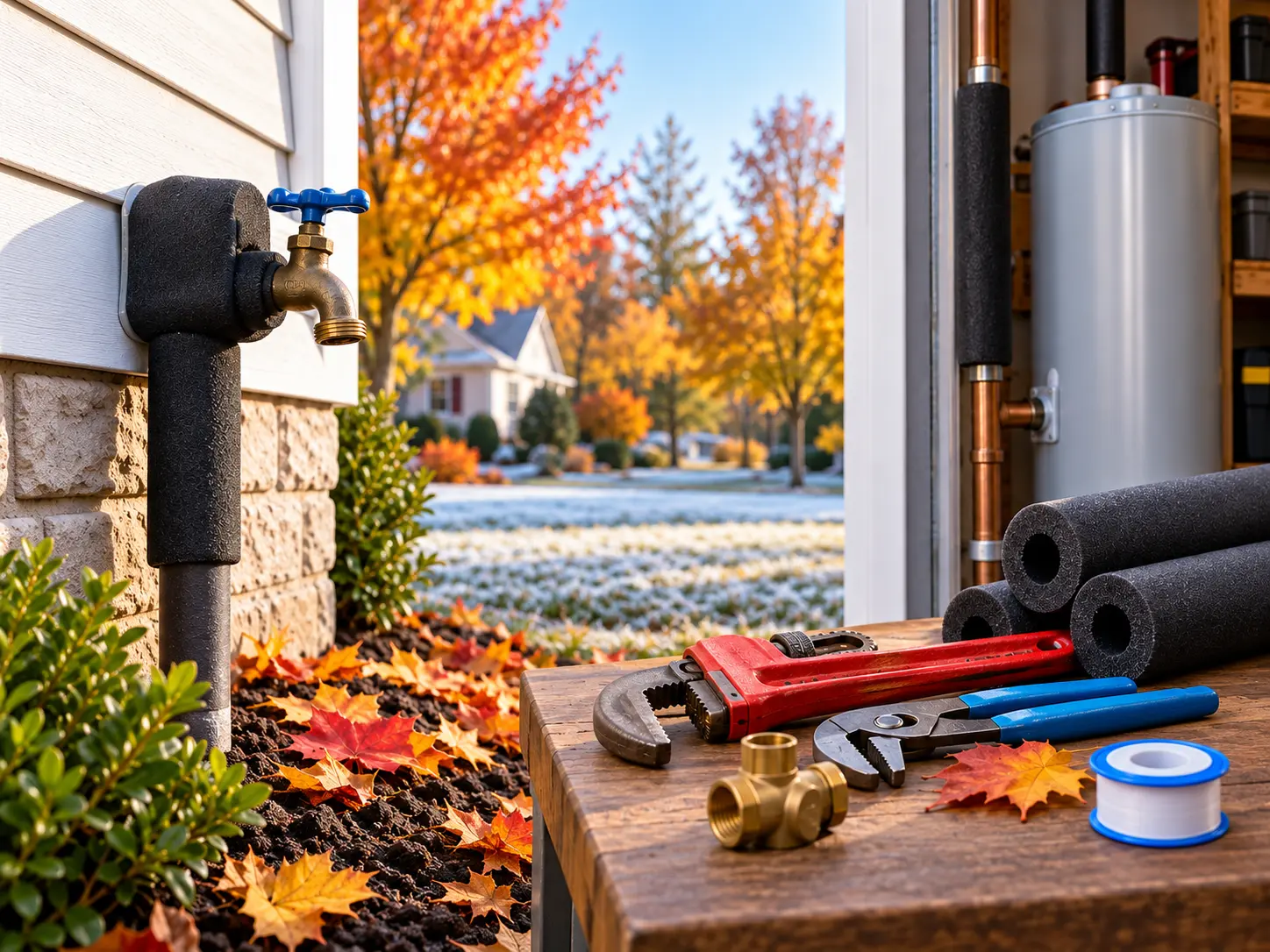
- The easiest and most common option. These pre-slit foam tubes slide right over the pipe. Choose a size that matches your pipe diameter for a snug fit. Many come with a self-sealing adhesive strip along the seam.Foam pipe sleeves:
- Fiberglass or foam wrap that spirals around the pipe. Useful for fittings, valves, and irregular shapes that sleeves don’t fit well.Pipe wrap:
- For the coldest, most exposed pipes, UL-listed heat tape provides active, electric warmth along the pipe’s length. Follow the manufacturer’s instructions exactly, keep power cords away from moisture, and never overlap the tape on itself.Heat tape or heat cable:
Install It Correctly
- Measure the pipe length and cut the insulation to fit, then slide or wrap it on snugly without compressing it—compressed insulation loses its protective value
- Seal every seam and joint with tape so there are no gaps, and pay special attention to elbows, T-joints, and valves where pipes are most exposed
- Leave no bare sections—a single uninsulated gap is where freezing starts
- For pipes that get heat tape, apply the insulation over the tape only if the manufacturer’s instructions allow it
Don’t Forget the Air Around the Pipes
Insulating the pipe is only half the job. The air around it matters just as much:
- Seal gaps and cracks in walls, floors, and foundations near pipes with caulk or expanding foam to block cold drafts
- Add insulation to under-insulated attics, basements, and crawl spaces to keep the whole space warmer
- Weather-strip drafty windows and doors near plumbing
- These steps also lower your heating bills, so they pay you back beyond freeze protection
Cold Snap Tactics: Extra Protection When It’s Dangerously Cold
When a hard freeze or an extreme cold snap is in the forecast—sustained temperatures in the teens or lower—take these additional steps on top of your insulation:
Let Faucets Drip
Open the faucets served by your most vulnerable pipes to a slow trickle, especially overnight. Moving water freezes far less easily than still water, and even a small, steady flow relieves the pressure buildup that actually bursts pipes. A dripping faucet costs pennies in water. A burst pipe costs thousands. On the coldest nights, run both the hot and cold sides at a trickle on at-risk fixtures.
Open Cabinet Doors
For sinks on exterior walls, open the cabinet doors underneath so warm household air can circulate around the supply lines. This simple step keeps the pipes several degrees warmer during a cold snap.
Keep the Heat On and Steady
Resist the urge to drop the thermostat at night during extreme cold. Keeping your home at a steady, warm temperature costs a little more on the heating bill but far less than a burst pipe. Never let indoor temperatures drop below 55°F, even in rarely used rooms, and make sure heat reaches any space with vulnerable pipes.
Apply Temporary Heat to Trouble Spots
If you have a known problem pipe in a cold garage or crawl space, a portable space heater placed safely nearby (away from anything flammable) during an extreme cold snap can prevent a freeze. This is a short-term measure, not a substitute for proper insulation.
Protecting Pipes When You’re Away
Winter travel is when frozen-pipe damage does the most harm, because no one is home to catch a problem early. Before you leave for a winter trip:
- Set the thermostat to at least 55°F for the entire time you’re away.Never turn the heat off.
- under sinks on exterior walls to let warm air reach the pipes.Open cabinet doors
- if you’ll be gone for an extended period, then open a faucet to drain the pressure from the system. With the water off, even a failed pipe can only release what’s already in the lines.Shut off the main water supply
- every day or two, and make sure they know where the main shut-off valve is.Ask a neighbor to check on your home
- that alerts your phone if indoor temperatures drop or moisture is detected, giving you time to act before a small problem becomes a flood.Consider a freeze alarm or smart leak detector
What to Do If a Pipe Freezes
If you turn on a faucet in cold weather and only a trickle comes out, you likely have a frozen pipe. Act quickly but carefully—a frozen pipe may already be cracked, and thawing it the wrong way can make things worse.
Step 1: Keep the Faucet Open
Open the faucet served by the frozen pipe. As the ice melts, the running water will help thaw the remaining blockage, and the open faucet relieves pressure so a cracked pipe is less likely to burst.
Step 2: Locate the Frozen Section
Follow the pipe from the faucet toward the coldest area—an exterior wall, a crawl space, an unheated basement. Look for frost on the pipe, a bulge, or a section that’s noticeably colder to the touch.
Step 3: Apply Gentle Heat
Warm the frozen section using a safe heat source, working from the faucet end toward the frozen area so melting ice can drain out:
- A hair dryer on its highest setting
- An electric heating pad wrapped around the pipe
- A portable space heater kept at a safe distance from anything flammable
- Towels soaked in hot water, wrapped around the pipe and refreshed as they cool
Never use a blow torch, open flame, or any device with an open flame to thaw a pipe. This is a serious fire hazard and can damage the pipe. It’s one of the most common causes of house fires during cold snaps.
Step 4: Know When to Call a Professional
Call a licensed plumber right away if:
- You can’t locate the frozen section or it’s inside a wall where you can’t reach it
- The pipe has already burst or you see water leaking—shut off your main water valve immediately and call for emergency service
- You thaw one pipe and discover others are frozen too, which is common once one freezes
- The pipe is a material you’re unsure how to handle, or you’re uncomfortable with any part of the process
Rick Lucas Plumbing offers 24/7 emergency service with a typical 60-minute response time for frozen and burst pipes across Bucks County. If you’re facing an active leak or a pipe you can’t thaw, call (215) 396-0736 right away.
Why Bucks County Homeowners Choose Rick Lucas Plumbing
Frozen and burst pipes are some of the most urgent and damaging plumbing emergencies a homeowner can face. When water is actively flooding your home in the middle of a January night, you need a plumber who answers the phone and shows up fast—and who can also help you prevent the problem in the first place.
Rick Lucas Plumbing & Remodeling brings 35+ years of Master Plumber expertise to both winterization and emergency pipe repair across Bucks County. Rick is your direct point of contact—no dispatchers, no call centers. Whether you want your vulnerable pipes insulated before winter or you’re dealing with a burst pipe right now, you’re reaching the Master Plumber himself, with 24/7 emergency availability when you need it most.
Our customers rely on that responsiveness. One Bucks County homeowner shared: “Rick returned my call in less than an hour.” Another noted: “Rick did a great job replacing all of my domestic water copper piping with PEX tubing.” When winter puts your pipes at risk, experience and fast response make all the difference.
We serve Feasterville, Southampton, Richboro, Holland, Newtown, Warrington, Langhorne, Levittown, Yardley, Bensalem, Warminster, Ivyland, and all of Bucks County. Free consultations, transparent pricing, and 24/7 emergency availability. PA Master Plumbing License PA144291, BuildZoom Score 91/100.
Frequently Asked Questions
Q: At what temperature do pipes freeze?
Water generally begins to freeze in exposed pipes once sustained temperatures drop into the low 20s Fahrenheit, around 20–22°F. However, wind chill, poor insulation, and cold drafts can cause freezing sooner. In Bucks County, overnight lows regularly reach this range from December through February, so any unprotected pipe in a cold space is at risk all winter.
Q: Which pipes are most likely to freeze?
The pipes most at risk are those in unheated or poorly heated areas: garages, crawl spaces, unfinished basements, attics, runs along exterior walls, pipes under sinks on exterior walls, and outdoor spigots. These spaces lack the warm household air that protects interior pipes, so they’re the ones to insulate first.
Q: Does leaving a faucet dripping really prevent frozen pipes?
Yes. A slow trickle helps in two ways: moving water freezes far less easily than still water, and the open faucet relieves the pressure buildup that actually causes pipes to burst. On extremely cold nights, running both the hot and cold sides at a trickle on your most vulnerable fixtures is cheap, effective insurance against a costly burst.
Q: What is the best insulation for pipes?
Foam pipe sleeves are the easiest and most common choice—they slide right over the pipe and many have a self-sealing seam. For fittings and irregular shapes, fiberglass or foam pipe wrap works better. For the coldest, most exposed pipes, UL-listed heat tape adds active electric warmth. The best choice depends on the pipe’s location and how exposed it is.
Q: Should I turn off my water when I leave for the winter?
For extended winter trips, yes. Shut off the main water supply and open a faucet to drain the pressure from the lines. With the water off, even a failed pipe can only release what’s already in the system rather than flooding continuously. Also keep the heat set to at least 55°F and ask a neighbor to check on the home.
Q: What should I do first if a pipe freezes?
Open the faucet served by the frozen pipe. This lets melting water flow and relieves pressure so the pipe is less likely to burst. Then locate the frozen section and apply gentle heat with a hair dryer, heating pad, or space heater, working from the faucet end toward the ice. Never use an open flame. If you can’t reach the pipe or it has burst, shut off your main water valve and call a plumber.
Q: Why did my pipe burst at a spot away from where it was frozen?
When ice forms in a pipe, it pushes water ahead of it, and pressure builds in the section between the ice and a closed faucet. The pipe often fails at that pressurized point rather than at the ice itself. This is why keeping a faucet open to relieve pressure is so important—it protects the whole pipe, not just the frozen spot.
Q: How much does it cost to repair a frozen or burst pipe in Bucks County?
The cost depends on the pipe’s location, the material, and how much water damage occurred. A simple accessible pipe repair is far less than a burst pipe inside a wall that also caused flooding and requires restoration. This is exactly why prevention matters so much. Rick Lucas Plumbing offers free consultations and provides transparent estimates, with 24/7 emergency service for active leaks.
Next Steps
Winterizing your pipes is one of the highest-value things you can do to protect your home from costly winter damage. Here’s your action plan:
- Walk through your home and identify the vulnerable pipes in garages, crawl spaces, basements, attics, and along exterior walls
- Insulate those pipes with foam sleeves, wrap, or heat tape, sealing every gap and joint
- Seal drafts near pipes and keep your home heated to at least 55°F all winter
- During extreme cold snaps, let vulnerable faucets drip and open cabinet doors on exterior walls
- If a pipe freezes and you can’t safely thaw it, or if one bursts, call Rick Lucas Plumbing at (215) 396-0736 for 24/7 emergency service
Don’t wait for a frozen pipe to find out which ones were vulnerable. Contact Rick Lucas Plumbing & Remodeling today at (215) 396-0736 or visit ricklucasplumbing.com to winterize your home before the cold arrives, or for fast emergency service if a pipe has already frozen. We serve Feasterville, Southampton, Warminster, Langhorne, and all of Bucks County with 24/7 emergency availability and transparent pricing. “The Best Plumber in Bucks County!”
About the Author
Rick Lucas is the owner and Master Plumber at Rick Lucas Plumbing & Remodeling, a family-owned plumbing company serving Feasterville and all of Bucks County, PA. With over 35 years of hands-on plumbing experience and a Pennsylvania Master Plumbing License (PA144291), Rick specializes in residential plumbing, commercial plumbing, pipe insulation and winterization, frozen and burst pipe repair, water heater services, bathroom remodeling, and emergency repairs. Rick is the main point of contact for every customer, ensuring expert service from diagnosis to completion.