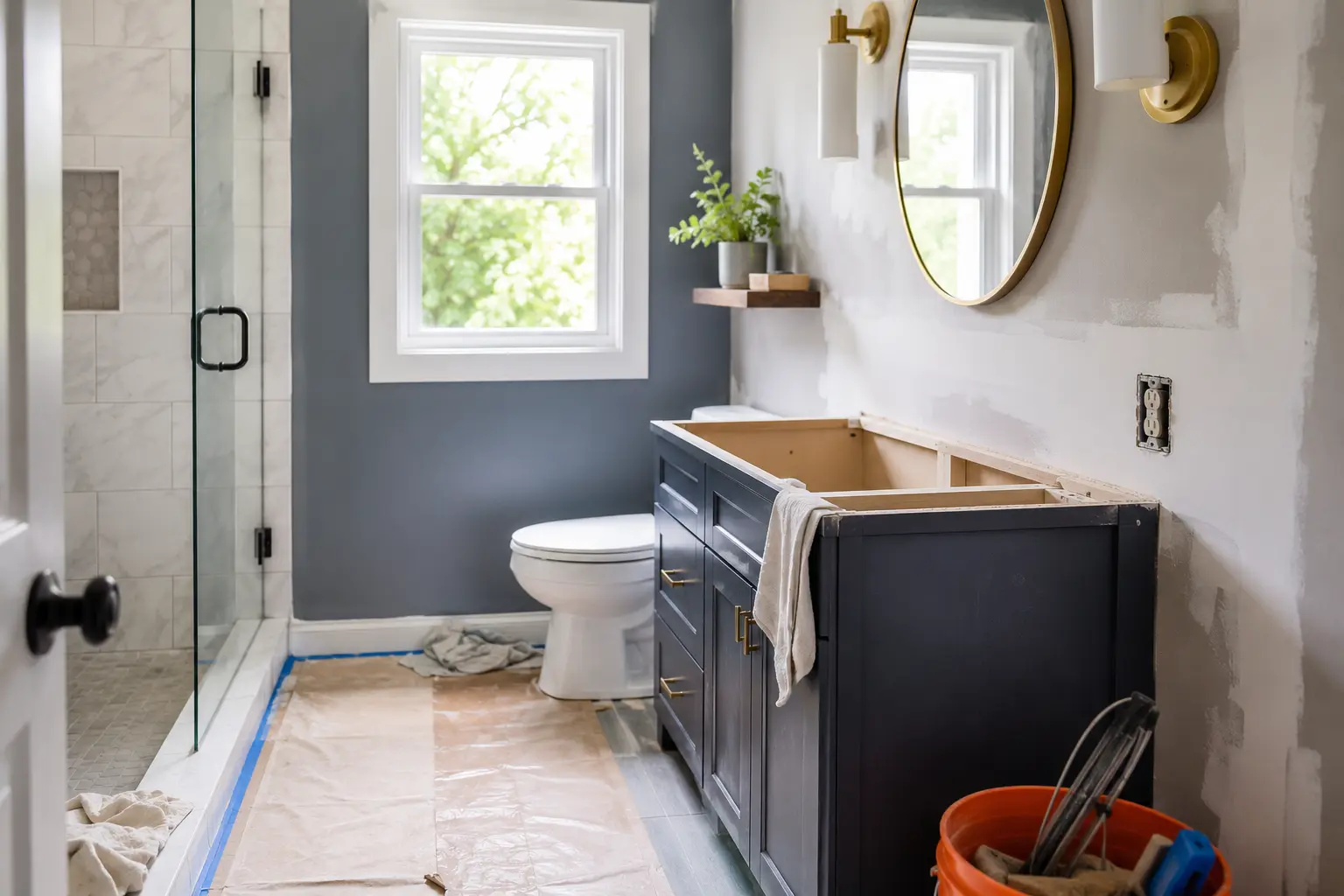
The right space-saving fixtures can transform a cramped, frustrating bathroom into a room that feels open, functional, and genuinely comfortable to use—without adding a single square foot. If you’re a Bucks County homeowner dealing with a small bathroom (most measure between 35 and 40 square feet), you already know the daily frustrations: bumping into the vanity door, having nowhere to store towels, or feeling claustrophobic every time you step inside. The problem isn’t always the room size—it’s the fixtures inside it.
Most small bathrooms in Feasterville, Southampton, Levittown, and surrounding Bucks County neighborhoods were built with standard-sized fixtures that eat up floor space and create awkward layouts. Swapping even two or three of those fixtures for purpose-built compact alternatives can reclaim 6–12 inches of usable space—and in a 5×7 bathroom, that’s the difference between a room that works and one that doesn’t.
This guide covers the specific space-saving fixtures that deliver the highest return on investment for small Bucks County bathrooms, explains why each one makes a measurable difference, and shows you where the plumbing expertise matters most. In our 35+ years of bathroom remodeling across Bucks County, we’ve learned that smart fixture selection—not expensive square footage additions—is what actually solves the small bathroom problem.
What You’ll Learn
- Why Small Bathrooms Feel Smaller Than They Are
- The Real Causes Behind Wasted Space
- 6 Space-Saving Fixtures Worth the Investment
- Planning Your Small Bathroom Remodel
- Why Bucks County Homeowners Choose Rick Lucas Plumbing
- Frequently Asked Questions
- Next Steps
Why Small Bathrooms Feel Smaller Than They Are
A 35–40 square-foot bathroom—the typical small full bath in a Bucks County home—can actually function very well if the layout respects the space. The problem is that most small bathrooms were designed decades ago with fixtures and layouts that waste inches in every direction.
Here’s what makes a small bathroom feel even smaller:
- Bulky floor-mounted vanities that block the visual line of the floor, making the room feel closed off
- Standard-depth toilets that project 28–30 inches from the wall, eating into the already limited walking path
- Swing-out vanity doors and shower doors that require clearance space that could otherwise be used
- Oversized countertops with unused surface area that reduce the open floor space below
- Traditional tub/shower combinations that dominate one entire wall and create a dark, boxy enclosure
- No dedicated storage, forcing towels, toiletries, and supplies onto countertops and the floor
The fundamental issue in most small Bucks County bathrooms isn’t a lack of square footage—it’s fixtures that were never designed for the space. Replacing them with purpose-built compact alternatives is the single most effective remodeling strategy for small bathrooms.
The Real Causes Behind Wasted Space
In our 35+ years of remodeling bathrooms across Feasterville, Warminster, Richboro, and Newtown, we’ve found that wasted space in small bathrooms comes down to three root causes:
Standard Fixtures in Non-Standard Rooms
Most homes in Bucks County were built between the 1940s and 1980s, when builder-grade fixtures came in one size. A 60-inch tub, a 24-inch vanity, and a standard elongated toilet were installed in every bathroom regardless of the room’s dimensions. In a master bath, those work fine. In a 5×7 or 5×8 secondary bathroom, they create a room where you can barely turn around.
Layouts That Ignore Flow
The layout of fixtures matters as much as their size. A common mistake we see is placing the toilet directly across from the door, creating a visual bottleneck, or positioning the vanity so its door swings into the shower entry. In small bathrooms, every inch of clearance matters—and poor fixture placement turns usable space into dead zones.
Outdated Plumbing Configurations
Older Bucks County homes often have plumbing stub-outs (the pipe connections in the wall and floor) in positions that dictate where fixtures must go. Moving a toilet or vanity to a better position requires moving the drain and supply lines—work that only a licensed plumber should do. Many homeowners assume they’re stuck with the existing layout, but a skilled plumber can relocate plumbing to support a dramatically better floor plan, often within the same budget as a fixture-only swap.
6 Space-Saving Fixtures Worth the Investment
These are the fixtures that make the biggest difference in small Bucks County bathrooms, ranked by the amount of usable space they reclaim and their return on investment:
1. Wall-Mounted (Floating) Vanity
A floating vanity is the single most impactful upgrade for a small bathroom. By mounting the vanity directly to the wall instead of sitting it on the floor, you gain visible floor space beneath the cabinet. This creates the visual effect of a larger room—your eye reads the continuous floor line as more space—while providing the same storage and countertop functionality.
- Space gained: 6–10 inches of visible floor space beneath the vanity
- Best sizes for small baths: 18–24 inches deep, 24–36 inches wide
- What to know: Wall-mounted vanities require proper blocking inside the wall for secure mounting. The drain and supply lines may need to be repositioned to align with the new vanity’s plumbing connections.
- Investment range: $400–$1,200 for the vanity, plus plumbing and installation
2. Compact Elongated or Round-Front Toilet
Standard toilets project 28–30 inches from the wall. Compact elongated models reduce that to 24–26 inches while maintaining a comfortable bowl shape. In a small bathroom, those 4–6 inches of recovered space directly in front of the toilet make the room feel noticeably more open and improve the walking path between fixtures.
- Space gained: 4–6 inches of floor depth in front of the toilet
- Upgrade option: Wall-hung toilets mount to a steel frame inside the wall and conceal the tank entirely, saving even more space and creating a sleek, modern look
- What to know: Replacing a toilet requires proper alignment with the existing floor flange. If you’re switching to a wall-hung model, the wall framing and drain line must be modified—this is work for a licensed plumber.
- Investment range: $250–$600 for a compact toilet, $800–$2,000+ for a wall-hung system including carrier frame and installation
3. Frameless Glass Shower Enclosure (or Walk-In Shower)
Replacing a dated tub/shower combination with a frameless glass shower enclosure or a walk-in shower is one of the most transformative changes you can make in a small bathroom. Glass eliminates the visual barrier that a shower curtain or framed enclosure creates, making the entire room feel larger. A walk-in shower with a curbless entry also improves accessibility—a growing priority for Bucks County homeowners planning to age in place.
- Space gained: Primarily visual—the room reads as one continuous space rather than being divided into zones
- Corner shower option: A neo-angle or corner shower base fits into an unused corner and frees up the wall for other fixtures
- What to know: Walk-in and curbless showers require precise floor slope for drainage, full waterproofing of the shower area, and properly positioned drain lines. This is where plumbing expertise matters most—improper waterproofing is the leading cause of moisture damage in bathroom remodels.
- Investment range: $1,500–$4,000 for shower conversion, depending on size, tile, and glass
4. Wall-Mounted Faucets
Mounting your sink faucet on the wall instead of on the vanity or countertop frees up the entire counter surface for storage and daily use. In a small bathroom where countertop space is at a premium, reclaiming the area where a traditional faucet and handles sit makes a meaningful difference. Wall-mounted faucets also simplify cleaning—no base around the faucet means no buildup where the fixture meets the counter.
- Space gained: 4–6 inches of usable countertop depth
- What to know: Wall-mounted faucets require supply lines routed through the wall rather than up through the vanity. This may involve opening the wall to install new plumbing connections—straightforward work for a licensed plumber, but important to plan for in your timeline and budget.
- Investment range: $200–$600 for the faucet, plus plumbing modification
5. Recessed Medicine Cabinet and Built-In Niches
Recessed storage uses the dead space inside your walls instead of protruding into the room. A recessed medicine cabinet over the vanity provides mirror, lighting, and storage in one zero-footprint fixture. Built-in shower niches eliminate the need for hanging caddies and corner shelves that crowd an already tight shower space.
- Space gained: 3.5–4 inches of room depth that a surface-mounted cabinet would consume
- What to know: Recessed installations require cutting into the wall between studs. A qualified professional should verify that no plumbing, electrical, or structural members are in the way before cutting. In older Bucks County homes, you may encounter unexpected pipes or wiring inside walls.
- Investment range: $150–$500 for a recessed cabinet, $200–$400 for a tile-ready shower niche
6. Sliding or Pocket Door
A standard bathroom door requires a 30-inch arc of clear floor space to swing open. In a small bathroom, that arc often collides with the vanity, toilet, or shower entry. A sliding barn-style door or pocket door (which disappears into the wall) eliminates the swing arc entirely and returns that space to the room.
- Space gained: Up to 9 square feet of usable floor space previously reserved for door clearance
- What to know: Pocket doors require a clear wall cavity to slide into—check that no plumbing or electrical runs through the target wall. Barn-style sliding doors mount on the exterior wall and don’t require wall modification but do need clearance on the wall beside the door frame.
- Investment range: $300–$800 for a barn door with hardware, $500–$1,500 for a pocket door installation
Planning Your Small Bathroom Remodel
A successful small bathroom remodel starts with getting the layout right before selecting finishes or fixtures. Here’s the approach we recommend:
- Measure everything first. Get exact dimensions of your bathroom—length, width, door placement, window location, and the positions of existing plumbing stub-outs. In small spaces, even half an inch matters.
- Prioritize the walking path. Every layout should preserve one clear, open rectangle of floor space when you step into the room. If you have to shuffle sideways to reach the sink, the layout needs work.
- Keep plumbing on one or two walls when possible. Consolidating the toilet, vanity, and shower/tub plumbing to the same wall (or two adjacent walls) reduces rough-in costs and keeps the remaining walls open.
- Choose fixtures before finalizing the layout. Know the exact dimensions of every fixture—including its required clearance—before committing to a floor plan.
- Consult a licensed plumber early. Moving a drain line, adding supply connections for a wall-mounted faucet, or converting a tub to a walk-in shower all require plumbing expertise. Getting a professional assessment before you start prevents costly mid-project changes.
A typical small bathroom remodel in Bucks County runs between $10,000 and $20,000, depending on fixture quality, tile selection, and whether plumbing needs to be relocated. Keeping the same general layout and upgrading fixtures within the existing plumbing configuration keeps costs toward the lower end of that range.
Why Bucks County Homeowners Choose Rick Lucas Plumbing
Small bathroom remodeling requires a plumber who understands how every fixture decision affects the plumbing behind the walls. A floating vanity, wall-mounted faucet, or walk-in shower conversion isn’t just a style choice—it’s a plumbing project that needs to be done right the first time.
Rick Lucas Plumbing & Remodeling specializes in small bathroom remodeling across Bucks County, combining 35+ years of Master Plumber expertise with the hands-on craftsmanship to handle everything from plumbing rough-in to final fixture installation. Rick is your direct point of contact throughout the entire project—from the initial free consultation through the final walkthrough.
Our Bucks County customers consistently note the difference. One homeowner shared: “Passes every inspection required by code.” Another said: “Very meticulous and left the place cleaner than he found it!” When you’re trusting someone to tear into your bathroom and rebuild it, that level of care and professionalism matters.
We serve Feasterville, Southampton, Richboro, Holland, Newtown, Warrington, Langhorne, Levittown, Yardley, Bensalem, Warminster, Ivyland, and all of Bucks County with free consultations, transparent pricing, and licensed, insured service. PA Master Plumbing License PA144291, BuildZoom Score 91/100.
Frequently Asked Questions
Q: What are the best space-saving fixtures for a small bathroom?
The fixtures that reclaim the most space are a wall-mounted floating vanity, a compact elongated or wall-hung toilet, a frameless glass shower enclosure, wall-mounted faucets, recessed medicine cabinets with built-in niches, and a sliding or pocket door. Each one recovers inches of usable space that standard-sized fixtures waste in a small room.
Q: How much does a small bathroom remodel cost in Bucks County?
A small bathroom remodel in Bucks County typically costs between $10,000 and $20,000, depending on fixture quality, tile selection, and the extent of plumbing work required. Keeping the existing plumbing layout and upgrading fixtures within those positions keeps costs lower. Moving drain lines or converting a tub to a walk-in shower increases the investment.
Q: Can I remodel a small bathroom without moving the plumbing?
Yes, and it’s often the most cost-effective approach. Swapping fixtures within the existing plumbing positions—replacing a floor-mounted vanity with a floating one, upgrading to a compact toilet, installing a frameless shower door—can dramatically improve the room without relocating drain or supply lines.
Q: Is a walk-in shower or tub/shower combo better for a small bathroom?
A walk-in shower with frameless glass typically makes a small bathroom feel larger because it eliminates the visual barrier of a shower curtain or tub surround. However, if your home needs at least one bathtub for resale value or family use, a compact freestanding tub or tub/shower combo may be the better choice. Discuss your priorities with your plumber during the consultation.
Q: Do wall-mounted toilets save space?
Yes. A wall-hung toilet conceals the tank inside the wall, reducing the fixture’s projection from 28–30 inches to as little as 21 inches. That saves 7–9 inches of floor depth—significant in a small bathroom. Wall-hung toilets also make floor cleaning easier and create a sleek, modern look.
Q: Should I hire a plumber or a general contractor for a small bathroom remodel?
For small bathroom remodels, a Master Plumber who also handles remodeling is often the best choice because plumbing is the most critical and complex element of the project. At Rick Lucas Plumbing & Remodeling, we handle everything from plumbing rough-in and fixture installation to coordinating tile, flooring, and finishes.
Q: How long does a small bathroom remodel take?
A typical small bathroom remodel takes one to three weeks, depending on the scope of work. A fixture swap with minimal plumbing changes can be completed in a week or less. A full remodel involving plumbing relocation, tile work, and new fixtures typically takes two to three weeks. Rick Lucas Plumbing provides a detailed timeline during your free consultation.
Q: Does Rick Lucas Plumbing handle complete bathroom remodeling?
Yes. Rick Lucas Plumbing & Remodeling provides complete bathroom remodeling services, including plumbing rough-in, fixture installation, shower and tub conversions, vanity installation, and coordination of tile and flooring work. Call (215) 396-0736 for a free consultation.
Next Steps
A small bathroom doesn’t have to feel small. The right fixtures, placed in the right positions, can transform a cramped space into a room that’s comfortable, functional, and beautiful. Here’s where to start:
- Measure your bathroom and identify which of the six fixtures above would make the biggest difference in your space
- Consider which upgrades you can make within your existing plumbing layout for the most cost-effective improvement
- For a professional assessment of your options, call Rick Lucas Plumbing at (215) 396-0736 for a free, no-obligation consultation
- We’ll walk through your bathroom, discuss your goals, and provide a transparent estimate before any work begins
Ready to make your small bathroom feel bigger? Contact Rick Lucas Plumbing & Remodeling today at (215) 396-0736 or visit ricklucasplumbing.com. We specialize in small bathroom remodeling for Bucks County homeowners—from Feasterville and Southampton to Warminster, Langhorne, and beyond. “The Best Plumber in Bucks County!”
About the Author
Rick Lucas is the owner and Master Plumber at Rick Lucas Plumbing & Remodeling, a family-owned plumbing and remodeling company serving Feasterville and all of Bucks County, PA. With over 35 years of hands-on experience and a Pennsylvania Master Plumbing License (PA144291), Rick specializes in small bathroom remodeling, residential plumbing, commercial plumbing, water heater services, and emergency repairs. Rick is the main point of contact for every customer, ensuring expert craftsmanship from design consultation to final walkthrough.