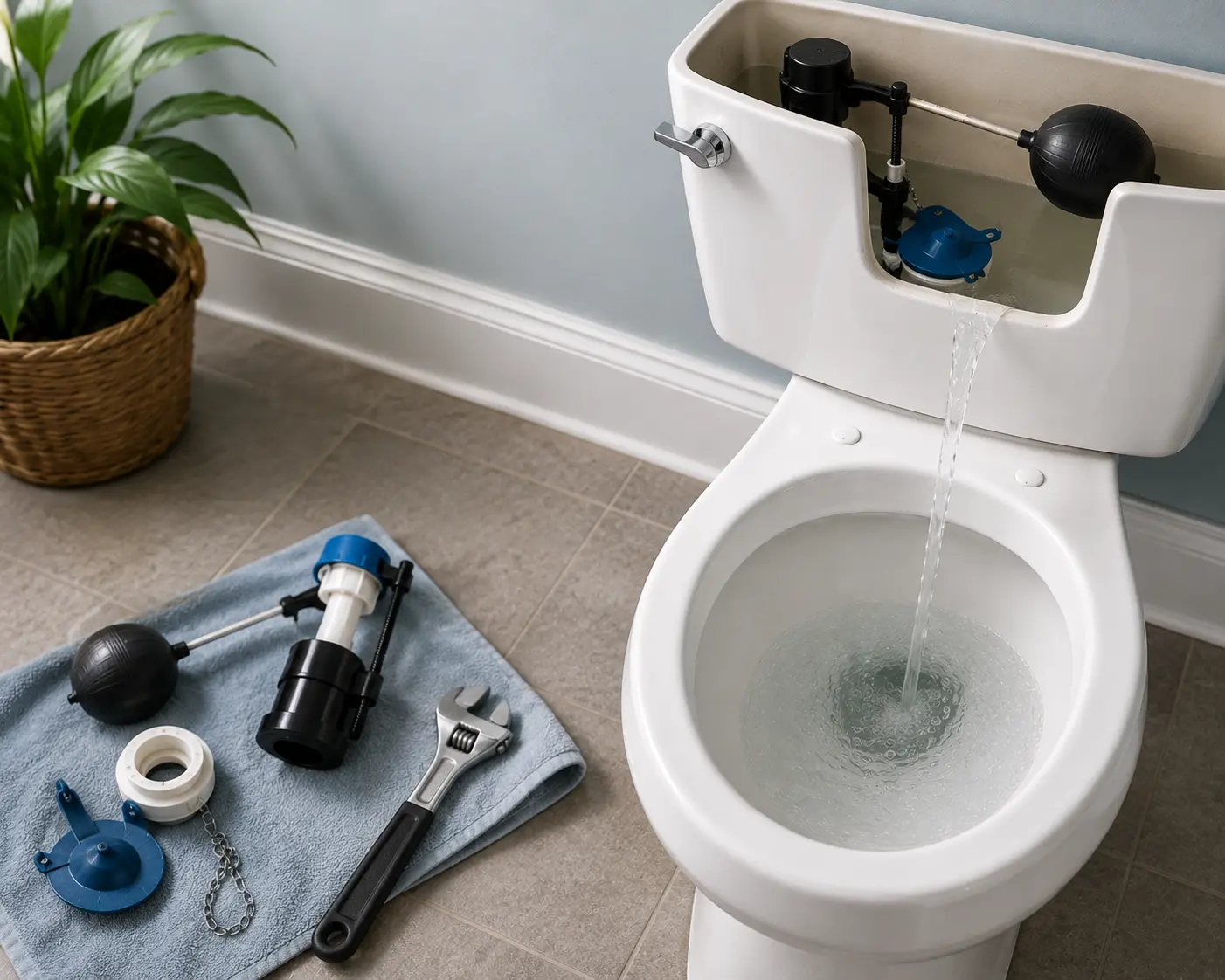
Testing your sump pump takes about five minutes, requires nothing more than a bucket of water, and is the single most important thing you can do to prevent basement flooding before spring storms hit Bucks County. Yet most homeowners never think about their sump pump until it’s already failed—and by then, water is rising in the basement and every plumber in the area is booked solid.
If your sump pump hasn’t run since last spring, or if you’ve never tested it at all, right now is the time. March through June is peak sump pump season across Feasterville, Southampton, Warminster, and all of Bucks County. Snowmelt saturates the ground, spring rains raise the water table, and your sump pump goes from sitting idle to running every few minutes—sometimes for days at a time. A pump that’s been sitting dormant all winter may have a stuck float switch, a clogged intake, or a dead motor, and you won’t know until you test it.
This guide walks you through a complete sump pump test in five simple steps, explains what each result means, and tells you exactly when it’s time to call a professional. In my 35+ years as a Master Plumber serving Bucks County homeowners, I’ve responded to hundreds of flooded basements that could have been prevented with a five-minute test done a week earlier.
What You’ll Learn
- Why Your Sump Pump Matters More Than You Think
- What Causes Sump Pumps to Fail in Spring
- How to Test Your Sump Pump in 5 Steps
- What to Do If Your Sump Pump Fails the Test
- Why Bucks County Homeowners Choose Rick Lucas Plumbing
- Frequently Asked Questions
- Next Steps
Why Your Sump Pump Matters More Than You Think
Your sump pump is the last line of defense between your basement and the groundwater that surrounds your home’s foundation. When rain and snowmelt raise the water table, water pushes against your basement walls and floor through a force called hydrostatic pressure. Without a functioning sump pump to collect and redirect that water, it seeps through cracks, floor joints, and porous concrete into your living space.
Here’s why this matters for Bucks County homeowners specifically:
- Bucks County’s clay-heavy soil holds moisture instead of draining it, creating persistent hydrostatic pressure against foundations during wet months
- Many homes in Feasterville, Levittown, Southampton, and Holland were built on lots with moderate to high water tables that rise significantly in spring
- Spring storms frequently cause power outages across Bucks County—and when the power goes out, your sump pump stops working at the exact moment you need it most
- A flooded basement can cause thousands of dollars in damage to drywall, flooring, electrical systems, stored belongings, and HVAC equipment within hours
- Mold can begin growing in a damp basement within 24–48 hours, creating health risks and expensive remediation costs
The difference between a dry basement and a flooded one often comes down to a sump pump that was tested and maintained before storm season—versus one that wasn’t.
What Causes Sump Pumps to Fail in Spring
Understanding why sump pumps fail helps you know what to look for during your test. In our 35+ years of sump pump service calls across Bucks County, these are the most common failure causes:
Stuck or Jammed Float Switch
The float switch is what tells your sump pump to turn on when water reaches a certain level. After months of sitting idle during dry winter conditions, the float can become stuck against the side of the pit, tangled in the power cord, or jammed by debris that settled into the basin. When the float can’t rise freely, the pump never receives the signal to activate—even as water fills the pit and overflows onto your basement floor.
Clogged Intake Screen or Discharge Line
Dirt, gravel, and debris naturally accumulate in the sump pit over time. If the intake screen at the base of the pump becomes clogged, the motor runs but can’t pull water efficiently. Similarly, the discharge line that carries water outside can freeze, collapse, or become blocked at the exit point—especially after a Bucks County winter where ice may have damaged the outdoor drainage path. A pump that runs but doesn’t actually move water is as dangerous as one that doesn’t run at all.
Worn or Failed Motor
Sump pump motors have a finite lifespan. Most residential sump pumps last between five and seven years with regular use, though pumps in high-water-table areas of Bucks County may wear out faster due to more frequent cycling. Motors can also fail after sitting idle for extended periods—bearings seize, capacitors degrade, and electrical connections corrode. A pump that worked perfectly last September may not start at all in March.
Power Supply Issues
Your sump pump plugs into a GFCI (Ground Fault Circuit Interrupter) outlet, which is designed to trip when it detects a ground fault. Moisture in the basement, a minor electrical event, or even a nearby appliance can trip the GFCI—silently cutting power to your sump pump. Many homeowners discover their pump was unpowered for weeks or months without realizing it. Spring storms also bring power outages, which render any pump without battery backup completely useless at the worst possible time.
How to Test Your Sump Pump in 5 Steps
This test takes about five minutes. You’ll need a five-gallon bucket of water and a flashlight. If your pump has a battery backup, you’ll also want to test that system separately.
Step 1: Check the Power and GFCI Outlet
Before you touch anything else, confirm your sump pump has power. Look at the outlet where the pump is plugged in—it should be a GFCI outlet with “Test” and “Reset” buttons. Press the “Test” button (which should trip the outlet), then press “Reset.” You should hear a click. Confirm the pump’s power cord is securely plugged in and that no other devices are sharing the circuit that could trip the breaker.
If the GFCI won’t reset or there’s no power to the outlet, check your breaker panel. A tripped breaker is one of the most common—and most easily fixed—causes of sump pump failure.
Step 2: Inspect the Sump Pit
Remove the sump pit cover and shine your flashlight inside. You’re looking for several things:
- Debris, gravel, or sediment that may have settled around the pump or on the intake screen
- The float switch—confirm it moves freely and isn’t pinned against the pit wall, tangled in the cord, or buried under debris
- The check valve on the discharge pipe (this prevents water from flowing back into the pit after the pump shuts off)—make sure it’s intact and properly oriented
- Any unusual odors, which can indicate stagnant water or a drain line issue
If you see significant debris in the pit, clear it out carefully. A clean pit allows the pump and float to operate without obstruction.
Step 3: Pour Water Into the Pit
This is the core of the test. Slowly pour a five-gallon bucket of water into the sump pit. Watch what happens:
- The water level should rise and lift the float switch
- The pump motor should activate within a few seconds of the float reaching its trigger point
- You should hear the motor engage and see water begin moving through the discharge pipe
- The pump should clear the water from the pit efficiently—within 15–20 seconds for most residential pumps
- Once the water level drops, the float should lower and the pump should shut off automatically
If all five of these things happen, your pump is working. Pour a second bucket to confirm consistent performance. If any step fails—the float doesn’t rise, the motor doesn’t activate, the water doesn’t clear, or the pump doesn’t shut off—you have a problem that needs attention before the next storm.
Step 4: Check the Discharge Line Outside
While the pump is running during your test, walk outside and find where the discharge pipe exits your home. Confirm that water is actually flowing out of the pipe and being directed away from your foundation—not pooling right next to your house. Common discharge line problems include:
- A frozen or collapsed section of pipe (common after Bucks County winters)
- The discharge point being too close to the foundation, sending water right back toward the sump pit
- Debris or dirt blocking the exit point
- A missing or damaged extension that should carry water at least 4–6 feet from the foundation
If the discharge pipe is buried and you can’t see where it exits, listen for water flow during the test and check for soggy areas in the yard near the pipe’s path. In neighborhoods across Warminster, Newtown, and Warrington, we frequently find discharge lines that were damaged by frost heave or lawn equipment and no longer function properly.
Step 5: Test the Battery Backup (If You Have One)
If your sump pump has a battery backup system, test it separately by unplugging the main pump from the wall outlet and then pouring water into the pit. The backup pump should activate on battery power and clear the water. Check the battery’s charge level—most backup batteries last 10–12 hours of intermittent pumping, but an old or undercharged battery may only last a fraction of that.
If you don’t have a battery backup and you live in an area prone to spring power outages—which includes much of Bucks County—this is the single best upgrade you can make to protect your basement. A battery backup sump pump activates automatically when the primary pump loses power, giving you critical protection during the storms that cause the most flooding.
What to Do If Your Sump Pump Fails the Test
If your sump pump didn’t pass all five steps, here’s how to triage the situation:
Problems You Can Fix Yourself
- Tripped GFCI or breaker: Reset the outlet or flip the breaker back on. If it trips again immediately, you have an electrical issue that needs professional attention.
- Stuck float switch: Gently free the float from whatever is obstructing it—debris, the power cord, or the pit wall. Test again with water to confirm it activates.
- Debris in the pit: Remove sediment, gravel, and debris from around the pump and intake screen. Rinse the screen if accessible.
- Blocked discharge exit: Clear debris from the outdoor discharge point. If the line is frozen, let it thaw naturally—do not use a torch or open flame.
Problems That Need a Professional
- The motor won’t start at all despite confirmed power—the motor has likely failed and the pump needs replacement
- The motor runs but doesn’t pump water—the impeller may be damaged or the intake is severely clogged
- The pump runs continuously and won’t shut off—the float switch or check valve may have failed
- Strange grinding, rattling, or screeching noises during operation—bearing failure or impeller damage
- The pump is more than 7 years old and showing any performance issues—replacement is more cost-effective than repair
- You want to add a battery backup system—proper installation requires electrical and plumbing expertise
Don’t wait for the next storm to deal with sump pump problems. During heavy spring rain events, plumbing companies across Bucks County receive hundreds of emergency calls in a single day. Getting ahead of the problem now means you’re not competing with every other homeowner for service when it’s raining.
Why Bucks County Homeowners Choose Rick Lucas Plumbing
When your sump pump fails or needs replacement, you need a plumber who shows up quickly, diagnoses the problem accurately, and gives you a straight answer about whether to repair or replace—without upselling equipment you don’t need.
Rick Lucas Plumbing & Remodeling has been handling sump pump installations, replacements, and emergency repairs across Bucks County for over 35 years. Rick is a Master Plumber and your direct point of contact from the first phone call through job completion. No dispatchers, no call centers, no middlemen—just a licensed professional who knows Bucks County plumbing systems inside and out.
Our customers trust that approach. One Bucks County homeowner shared: “Rick returned my call in less than an hour.” Another noted: “Showed up early and not a penny over estimate.” When your basement is at risk, responsiveness and honesty matter.
We serve Feasterville, Southampton, Richboro, Holland, Newtown, Warrington, Langhorne, Levittown, Yardley, Bensalem, Warminster, Ivyland, and all of Bucks County. Free consultations, transparent pricing, and 24/7 emergency availability—including during spring storms when you need us most. Licensed and insured, PA Master Plumbing License PA144291, BuildZoom Score 91/100.
Frequently Asked Questions
Q: How often should I test my sump pump?
Test your sump pump at least twice per year—once in early spring before the thaw and heavy rains, and once in early fall. If you live in a high-water-table area of Bucks County or your pump runs frequently, quarterly testing is recommended. Always test before any forecasted major storm.
Q: How long do sump pumps last?
Most residential sump pumps last between five and seven years with regular use. Pumps in areas with high water tables or heavy sediment may wear out sooner due to more frequent cycling. If your pump is approaching seven years, plan for replacement rather than waiting for it to fail during a storm.
Q: Do I need a battery backup sump pump in Bucks County?
We strongly recommend it. Spring storms frequently knock out power across Bucks County, and a standard sump pump is useless without electricity. A battery backup activates automatically during outages and can run 10–12 hours of intermittent pumping. For homes with finished basements, a backup system is one of the most cost-effective forms of flood insurance available.
Q: My sump pump runs constantly. Is that normal?
No. A sump pump that runs nonstop typically indicates a failed check valve (allowing water to flow back into the pit after each cycle), a float switch stuck in the “on” position, an undersized pump for your water volume, or a high water table problem that needs professional assessment. Continuous running burns out the motor quickly and usually leads to complete failure.
Q: What does it cost to replace a sump pump in Bucks County?
A standard sump pump replacement in Bucks County typically runs between $400 and $700 depending on the pump model and installation complexity. A battery backup system adds approximately $1,000–$1,700 to the total. Rick Lucas Plumbing provides free consultations and transparent estimates before any work begins.
Q: Can I install a sump pump myself?
Basic pump replacements are within the skill range of experienced DIYers. However, if you need a new sump pit, discharge line routing, electrical work for a GFCI outlet, or battery backup installation, professional installation is recommended. Improper installation can void manufacturer warranties and create flooding risks.
Q: What should I do if my sump pump fails during a storm?
First, check the GFCI outlet and breaker panel—a simple power reset fixes many failures. If the pump has no power and you don’t have a battery backup, use a wet/dry vacuum or bucket to remove water manually. Do not allow water to sit in the basement, as mold can begin growing within 24–48 hours. Call Rick Lucas Plumbing at (215) 396-0736 for 24/7 emergency service.
Q: Why does my sump pit smell bad in spring?
A foul odor from the sump pit usually indicates stagnant water, bacterial growth, or a possible sewer gas issue. Clean the pit thoroughly, remove any debris or sediment, and pour a small amount of water down the pit to maintain the water seal that prevents sewer gases from entering. If the odor persists after cleaning, have a plumber inspect the drain connections.
Next Steps
Five minutes of testing now can save you thousands of dollars in flood damage this spring. Here’s your action plan:
- Run the five-step sump pump test described in this guide today—all you need is a bucket of water and a flashlight
- If the pump passes, mark your calendar to test again before the fall rain season
- If the pump fails any step, address DIY fixes immediately or call Rick Lucas Plumbing at (215) 396-0736 for a free consultation
- If your pump is more than five years old or you don’t have a battery backup, schedule a professional assessment before the next big storm
Don’t wait until the water is rising to find out your sump pump doesn’t work. Contact Rick Lucas Plumbing & Remodeling today at (215) 396-0736 or visit ricklucasplumbing.com for a free, no-obligation estimate. We’re Bucks County’s trusted Master Plumber—serving Feasterville, Southampton, Warminster, Langhorne, and all surrounding communities with 24/7 emergency availability and transparent pricing.